Hervé Degrève
Innovation to accelerate housing renovation
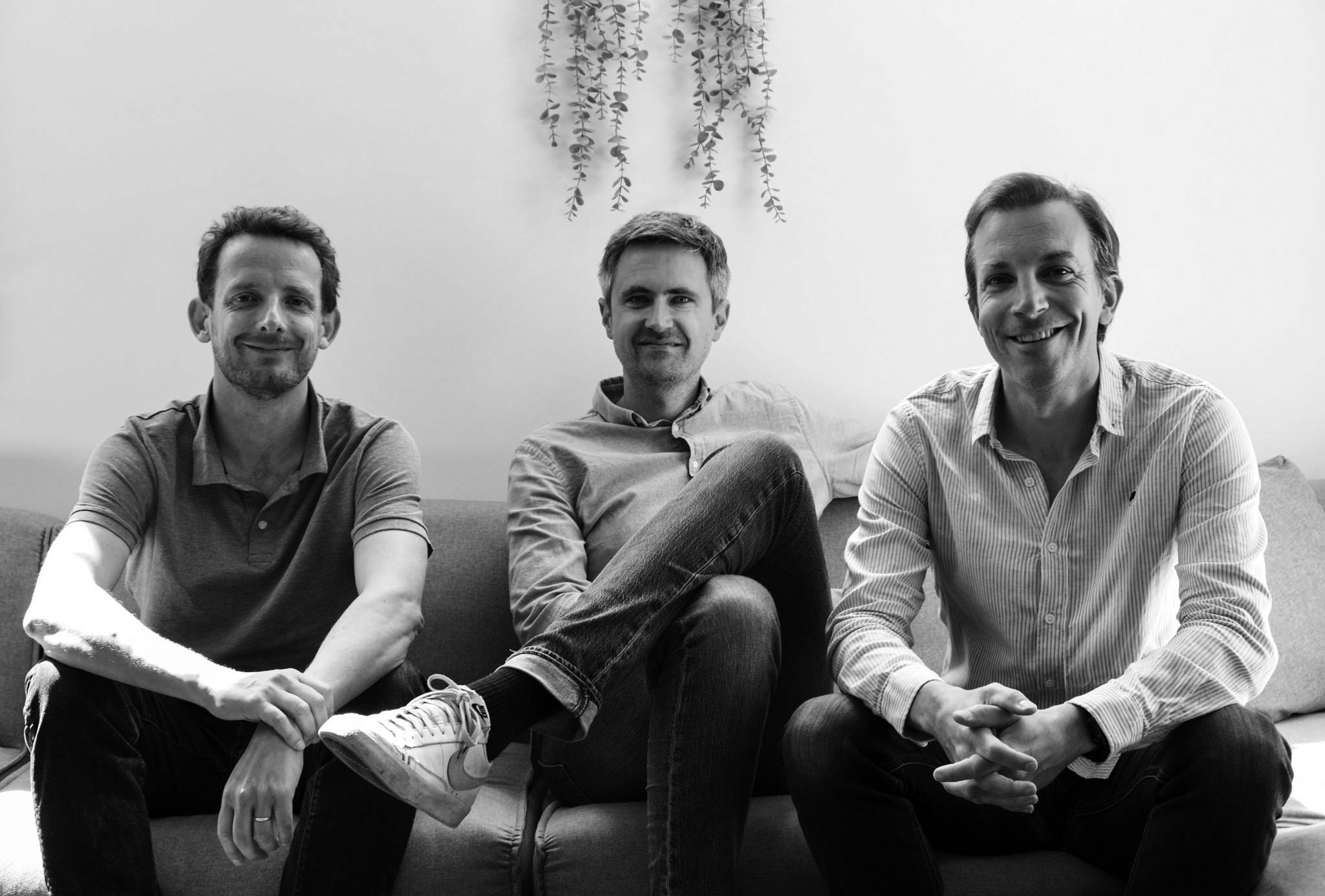
To accelerate the shift and address the major social and environmental challenges the real estate sector is facing, we must rethink existing models, break with established norms, and strongly invest in innovation. Energy-efficient renovation is the priority undertaking of the 21st century. To meet carbon neutrality targets by 2050, France needs to carry out 700,000 energy-efficiency renovations a year —a goal we are currently far from achieving. That is why Hervé Degreve, Mathieu Guerchoux and Sébastien Prot created Vasco: a new model and a genuine alternative to bank loans for low-income households struggling to find financing to upgrade homes that have become uncomfortable and energy-inefficient.
Hi Hervé,
Could you explain the key operating principles behind Vasco?
Vasco is a company which help to finance energy-efficiency renovation by offering a “third way” of funding—complementing state subsidies and bank loans.
We started with a simple assessment: a great part of renovation projects were falling through due to a lack of funding. We then looked for ways to tap into other resources.
With Vasco, we unlock the value tied up in the property itself, effectively allowing the home to finance its own renovation. Just three years ago, this was a somewhat unconventional idea in France—a country deeply attached to homeownership, where owning one’s own property is seen almost as a ultimate goal.
We often heard that no French homeowner would ever sell a share of their house just to renovate it. However, renovation has become so crucial to a home’s comfort, economic viability, and long-term value that many French people are now considering alternatives to traditional financing. It allows them to improve their quality of life and manage their expenses, while also planning for a future inheritance or sale with greater peace of mind.
Today, our idea seems far less far-fetched, as we receive around twenty funding requests a day. We are contacted by people ranging in age from 35 to 104. As a example, we were approached through our partner, Soliha, by a household consisting of a 104-year-old homeowner living with her 80-year-old daughter and 58-year-old granddaughter in a 110-sqm five-room apartment within a 12-unit complex in Mérignac. Major and costly renovations are required. Their share of the costs amounts to €71,000. While these three generations of women are eligible for €28,000 grants, they still need to cover the remaining €43,000—funds they do not have and cannot afford to borrow. Vasco then assesses how to invest in the project. Our focus is not on whether these three women can repay us, but on the extent to which the renovations will increase the property’s value, given that we will be acquiring a share of the property. This distinction is crucial for two reasons: we can finance a project that would not qualify for traditional bank financing, and no monthly repayments are required.
This breaks the deadlock. The three women will not have to pay anything either before or after the work is done. The total amount due is settled only when the property is eventually sold.


What led you to this ingenious solution that transforms financing into an investment?
We are three partners with very different backgrounds and roles. Having worked in the energy sector for about fifteen years, I focused specifically on renovation needs that were stalling due to financing issues. Consequently, I act as the liaison with partners and identify households looking for a solution.
Next, I hand things over to Sébastien; he and his team guide households through our financing process. Acquiring a share of a property entails legal steps involving a notary—a procedure similar to purchasing the property outright. We currently handle around ten transactions a month. Our challenge now is to streamline and scale up these operations.
Then, working behind the scenes, Mathieu handles the financing for the entire process; his mission is to raise capital from investors (whether individuals or corporate entities, private or institutional). He manages our real estate holding company—the actual purchaser of the properties we invest in—which consolidates all the properties we have financed and partially own.
Vasco’s operations are thus built on three core functions: promoting the model, scaling up transactions, and raising capital specifically for the building sector transition. We hold ESUS accreditation, which means investments in our holding company qualify for a 25% tax credit.
Have you ever had to walk away from a potential deal for one reason or another?
We base our investment decisions on the property’s projected final state. The funded project must add value to the property. For instance, we might decline to proceed with renovation work if we lack confidence in the contractors involved, or if we do not believe the work will actually add value; …or depending on the type and/or level of existing debt on the property… but our main competitor is inaction or abandonment by households that lose motivation.
Does Vasco work only on houses, or can it also handle apartments?
That’s an interesting point, because we initially started out working on houses, thinking that the co-ownership sector was too complex and didn’t necessarily need us. Then, we encountered a reality known in Belgium as “renoviction.” If renovation work is approved by a majority vote and a co-owning household lacks the funds to pay for it, they often end up having to leave their home. Ultimately, the social role we play is even more significant here than with single-family homes, because these people are at risk of losing their roof over their heads.
How does the Vasco solution integrate with existing renovation support schemes?
Perception of our solution has evolved. When we first launched, government agencies were curious about our model but remained very cautious; it was a new concept, we were a start-up, and the idea of acquiring equity stakes in homes seemed highly capital-intensive. It wasn’t the norm in France.
Faced with shrinking budgets, the State’s ambitions in this area are somewhat constrained. We can act as a partner. Decentralized government-linked bodies—such as Soliha, Urbanis, France Rénov’ service points, and local energy agencies (ALECs)—are now more willing to collaborate; they can refer households to us so we can work together to unlock stalled situations. Having a track record of funded projects helps our case. Some public-sector players even approach us before we contact them.
How many applications have you received so far, and how many households have you been able to assist through this “home equity” model?
We currently receive around twenty applications a day. For each one, we run a simulation and verify the applicant’s eligibility. Media visibility gives us a boost. Since our inception, we have processed approximately 4,000 applications. Around forty projects have been funded to date. We are currently funding about ten projects a month, with the goal of reaching one hundred funded projects this year and 1,000 by 2030.

What are the next major milestones for the rollout of Vasco?
We have validated the first stage: there is demand, and we have successfully raised funds. Our model operates using both an operational structure and a property-holding structure; the latter will need to raise increasing amounts of capital to meet growing financing needs.
We are also conducting a capital increase for our operational entity to scale up: we are raising two million euros to ensure the model’s long-term viability and enable it to play a more significant role in the renovation financing landscape.
We are gradually broadening our scope of action. Property renovation involves more than just energy efficiency; it encompasses aspects such as waterproofing and airtightness, roofing, drinkable water supply, and adaptations for the elderly. We focus on anything that makes a property habitable for both current and future owners.
Climate risks represent another key area we are looking at for the future. Issues such as soil conditions, clay soils, drought, and flooding pose significant stress factors—not only by 2030 but, even more critically, looking ahead to 2040–2050. We will need to identify funding sources to manage these risks.